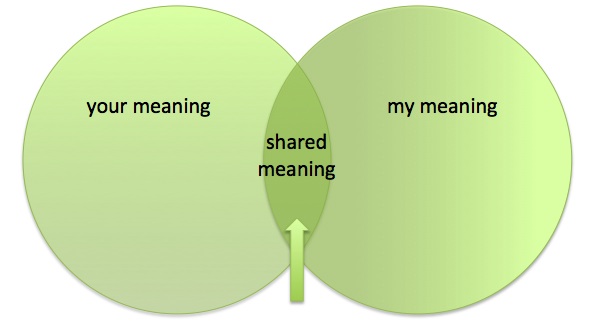
The Gottman Institute (otherwise known as some know-it-all relationship experts) describe something called “gridlock” as the perpetual unsolvable issues that cycle within a relationship. Over half of our relationship conflicts are gridlock conflicts, and they come out of a difference of value and belief systems, but can typically be managed. In that process we have potential to grow closer together because on the flip side of the unsolvable problems is how the interwoven values and beliefs start working together through conflict resolution to create shared meaning, purpose, and intimacy through these very conflicts.
The Gottman Institute describes the belief and value system as being linked to our dreams – and explains that most of the time that these are what we are actually disagreeing over. To water it down, we are arguing because we want what we want, and we fight over it because we want it badly.
Now, ask a woman what her dreams are – and often she will tell you that it is kids, a house, or a marriage. Ask a man what his dreams are, and you might be lucky to get something out that is similar to – well, I don’t know… to own some land. Other times, it’s to make a woman happy. Often, it is hard to get out of men what their specific dreams are – because I have figured out that more often than not they relate to them as their “mission” in life. We can also see religion through the lens of being more of a mission than a dream. However, I believe that an unspoken dream or desire that we all have, is a childhood one – and it’s universal. To be seen, known and understood – otherwise known as someone that, “really, really gets you.” Now, how else does someone really, really get us? Well, they get there by knowing our dreams, and not even just knowing them, but supporting them – supporting who we think we are.
Apart from individuals, we pursue the products of our heart – the dreams and missions. They have nothing to do with people, even if people play a part of it. Our dreams and missions are our priorities. They are part of the make-up of the fabric of who we are in this present moment. When someone comes out and says, well what’s important to you is important to me – and becomes a co-worker in that dream, all of a sudden, this person becomes valuable to us and THEY become a priority. They know at the depths of your soul who you are, what makes you tick and what brings you joy. A co-worker, then earns and becomes part of the balance of priorities, because they have become an essential part of the realization of dreams – they see into you, your dreams, your goals and your missions – they see who you are, and you feel known and important.
When all of this clicks, we begin to see this level of intimacy as invaluable, and we commit to this person, because we no longer want to be without this someone who is now essential to accomplishing the tasks in life that make life meaningful to us – “You love what I love, and now I love you too.
Now, all this sounds great – but we can get tripped up, and stuck in our own self-centered thinking. We can assume that once we are assured that this person is behind us, that they should want what we want. We can forget that we have to consider the fact that there is an “other” in the equation that requires respect and value too, with their own desires and agendas. If we fail to do that, the relationship suffers. Quite differently, if we respect and trust them, the wonderful part of this is that usually, when people support us in our dreams and missions, rather than being immersed in it, they add to mix because they can see more clearly than we can because they aren’t drowning in the thirst for it. They are the outside looking in. So, once we have established some degree of trust – the dream chasers have to hold onto the basic trust that a contributor to our dream will sometimes be more balanced, have your best interests at heart … and STILL see it differently, but in the best of ways.
A second place we can get tripped up is where our inborne insecurities, fears, and protective spirit can lead to the defensiveness that withholds trust and commitment, refuses to assume goodwill and demands full control – these areas are “personal work” areas that require self-awareness to be worked through. If we cannot gift trust to our partner, the result will be an imbalanced perception of power (balance of needs and wants in a relationship), and soon after, the demise of the relationship. If we cannot commit, our partner becomes our enemy and we will run at the first sign of trouble and won’t show up to solve for the win-win resolution. As you can see from the Gottman Institute house cartoon below, commitment and trust are two pillars of the Sound Relationship House. A healthier development would be that as we encounter someone who supports us in our missions and dreams, that we gift AND grow to trust that they have our best interests at heart, and as they push us, advise us, or disagree with us that we lean on the trust and commitment that we have gifted this person with. To an extent, a partner can be sensitive to the insecurities of the opposite partner –such as trust and commitment issues, or other insecurities, but to the extent that one does not own their insecurity, is the extent to which that insecurity will control and harm the relationship. Insecurities are painful, and they can lead both partners to act out of fear, and take more than they need – otherwise known as insisting on our way -with less or no positive regard for our partner.

A third place we get tripped up is a mistake that’s easy to make. A co-worker can easily forget to handle the partner’s dream with the care it deserves. They may start to say – well, what’s the big deal? It’s important to note that this IS sometimes accidental. If they start treat it like a regular task at hand and treat it with a more flippant attitude, then the care and support disappears – “seeing” their partner disappears. Even further still, they may unintentionally take over the dream, instead of walking it out as a supportive co-worker. That would be like someone designing MY dream house… without me! These, repeated offenses overtime can lead to a sense of feeling unknown and deflated, and can be part of the path to becoming uncommitted. After all, it is painful to be unknown, unseen and disconnected.
Other times, the dream co-worker simply cannot offer white gloves and sensitivity because a key component of the shared relationship house being built is respect of individuals – and it is missing. This includes valuing the thoughts, feelings, perceptions and circumstances of the partner. When it comes to decision making, it is important for the dream chaser to treat their partner’s personhood with regard, empathy and placing importance on our partner’s different feelings, thoughts, needs, wants and perceptions. Why is this important? Well, no one ever likes to be with someone who values the product over the person – whether the product is a dream or mission. So the danger of the mission maker, is that they are seeing through tunnel vision, and when that happens, there is no respect given or considered for the opposite partner. When this occurs, the opposite partner can get insecure – and angry. At that point, commitment can waver on both sides, for different reasons. One holds an “at all costs” mentality, and the other feels disrespected and misunderstood.
To sum it up, if either party senses disrespect of the relationship, their personhood, defensiveness, or a devaluing of their dreams or missions, or – the missions/dreams begin to directly challenge one another and they are not managed properly with boundaries and agreement of those – then both parties start to pull away and a downward spiral can ensure if the two do not emotionally reconnect and equalize the power imbalance through conflict resolution and empathy.
Now, some missions and dreams are flat out dealbreakers, and typically those ones are the types that are discussed up front and do not typically change. They are far and few in between. Here, respect looks like walking away from conflicting value systems. This takes discernment of self and other.
It is normal to expect that dreams will directly conflict – because dreams change over the course of our lifetime, and if we value our relationships, and the people we love, then we generally do try to work through them. Here, is where flexibility and self-awareness are key. Asking questions like, “what is it underneath the dream that I really want –is it to feel important?” or “What part of this can I be flexible on – timeline, process etc. – where can I say yes?” The more we can focus on the motives and underlying desires driving the dream product itself, and for areas where we can accept the input and influence of our partner, the easier and more successful we will be at working the fringes of flexibility out to find a middle ground win-win.
In speaking about the flexibility of things, the development of trust can impact that a lot too. It may become easier to become more flexible with the dreams that we hold, as we develop more trust, because we know our partner is for us, and not trying to keep us from what we think is best. We know that if we really do want something, they have our best interests at heart, and that alone makes us hold things more loosely.
However, when the relationship gets more intense, and requires more commitment and trust to start going the distance of interweaving shared meaning, we start hitting a chicken and the egg dynamic. A secure relationship, where everyone feels known can facilitate both parties going out and fulfilling goals and missions separately but also mutually when required or desired, and actually secure partners are much more successful outside of the relationship when they are secure in it too. However, insecurity can be created, and spiral out of control when too much sacrifice of these dreams on either side is lost, or if conflict is poorly managed by either individual, and one or both begin to feel like they are losing themselves, and their sense of self. Here, meaning of self wins over weaving together a new shared meaning of one-ness and unity, and following, the lack of security will breed more insecurity. The challenge is to find security and footing again, in order to breed more security. This is where holding personal boundaries and acceptance of your partner, or bargaining over compromise often wins – and still, my favorite – those “third creative solutions” that look nothing like the original ideas that can still result in win-wins. However, sometimes there are still ultimate deal breakers.
As you can see, nothing – the relationship, the mission or the dream, is ever at all costs.
So herein lies the work of two individuals – working out the shared missions and dreams. As we become different people though our life experiences, our dreams and missions will change, and we as people will change. The task here becomes, can two people reach a threshold of commitment from enough developed goodwill, personal self awareness / security and conflict resolution skills to continue to fight the battle to respect the dream/mission, the other person, and the relationship and keep building up. It takes two parties to do this work and there is every chance to fail as much as there is to succeed as humans are fluid, and ever changing.
Not all dreams are permanent, but they sure do matter.
 More Than You Can Ask For Blog